- AJ Products IE
- Blog
- Leadership
- Agile Leadership and Working Methods

Guide: Agile Leadership and working methods
So how do you become a more agile leader and how does an agile working method function?
As a family-owned business with 21 markets, we are continually focusing on our own leadership development. But we have also worked with entrepreneurs and business leaders for 50 years. So let us assist you with workplace installation – and contribute to your knowledge about leadership, for instance, agile leadership.
Where does agile leadership come from?
Agile leadership has its roots in the "Manifesto for Agile Software Development" written by a group of software developers in the USA at the beginning of the 2000s. The model was designed in response to the limitations and challenges of the traditional waterfall model. This method encompassed demands for everything from detailed requirements specifications, unnecessary bureaucracy, and the need for extensive documentation of the work performed. The argument was that in a rapidly changing world with constant market changes, a requirement for quick decisions and effective work needed a working method that was flexible with informal cooperation and swift decision-making.
How does one work agile?
Implementing an agile working method means that you as a leader encourage feedback, allow failures as a way to learn and grow and that the work should be able to be nimble. For example, employees should quickly be able to acclimate to new situations and needs. In its most fundamental form, agile leadership requires leaders to "lean in" more than "lean back" and actively engage, listen and motivate - but without micromanagement. There needs to be mutual trust between leaders and employees. Using terms such as us and we is a good way to create a sense of unity and team spirit.

Methods and Models
There are several popular methods and models related to agile working that are often used to help employees, teams, and entire companies become more efficient.
- Scrum is a project management method where communication, collaboration, and continuous improvement are key components. It focuses on breaking down complex projects into smaller manageable parts, known as "sprints". Each sprint has a specific timeframe, usually between a week and a month, during which a certain set of tasks should be completed. While working in the sprints, there are daily update meetings. There are three roles within Scrum - product owner, scrum master, and development team.
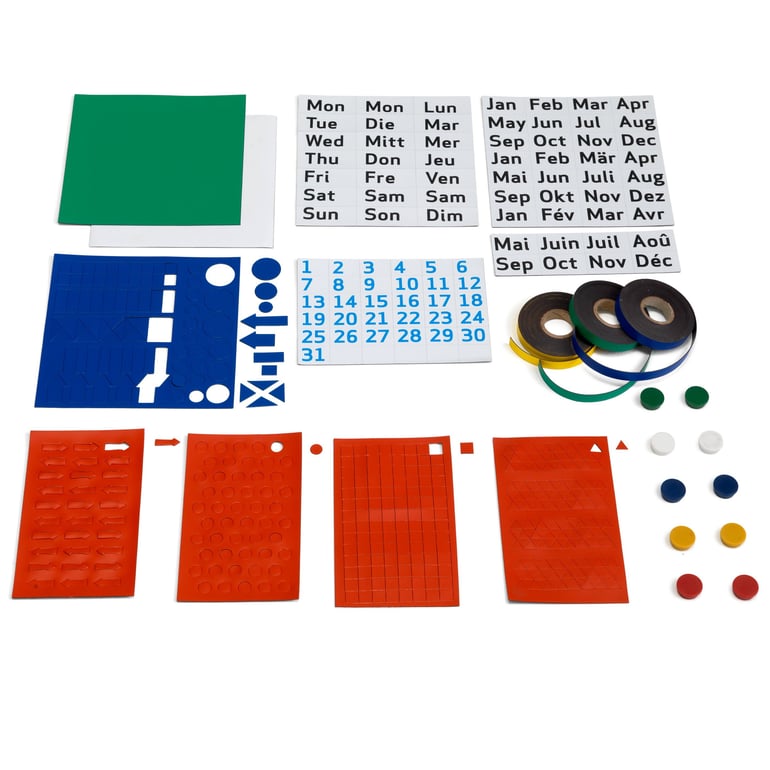
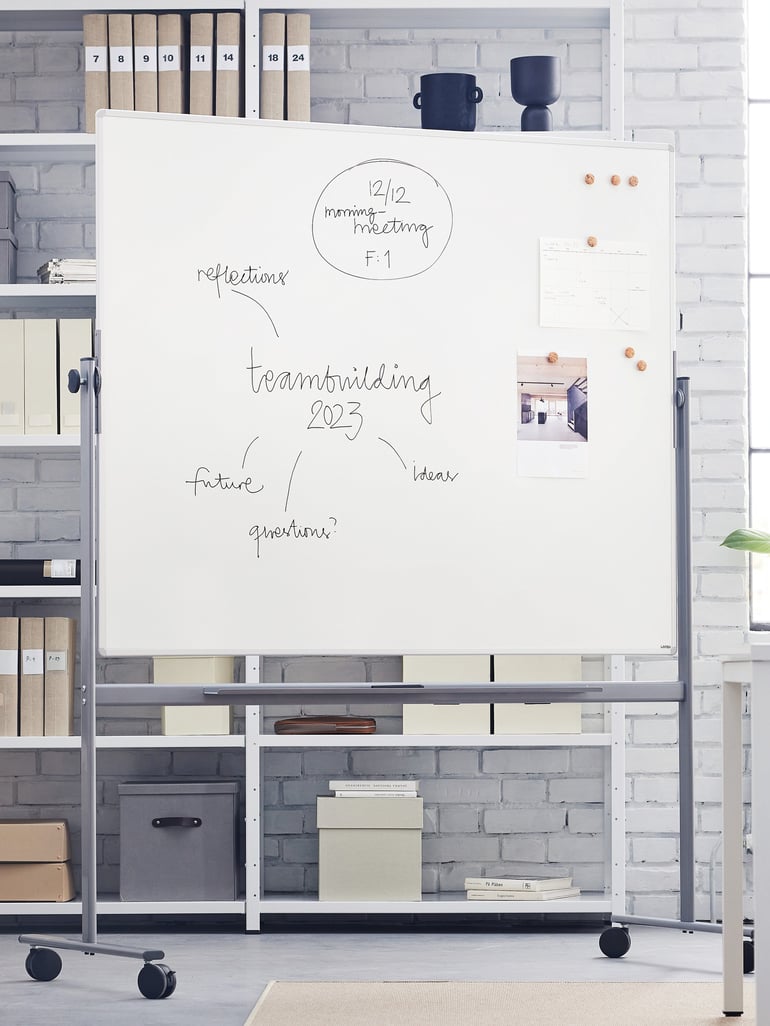
- Kanban is a method for visualizing workflows, processes, and optimizing results, as well as identifying bottlenecks for example. Work tasks are typically visualized on a bulletin board or a whiteboard divided into columns representing different stages of the work process (usually "Incoming", "Prioritized", "In progress", and "Completed"). With post-it notes or magnets , one then marks up on the board what needs to be done, when, in what order, etc. This provides a clear and transparent overview that everyone can follow.
- The Lean model is a work method that aims to streamline work methods, cut waste in the form of unnecessary time consumption and redundant resources, and maximize productivity. An example is through standardized processes, where all employees do certain elements the same way, it is easier to detect errors. And in this way, rectify them faster and thus further optimize the work and increase profitability.
- The Scaled Agile Framework, also known as SAFe, was created in an attempt to make entire, and often larger, companies more agile in their work methods through, among other things, more efficient workflows. For example, if Scrum is a core in agile working methods, SAFe can be seen as a way to scale that up to a larger and overarching approach that encompasses the entire organization or company. A foundation of SAFe is to view companies at three levels: portfolio, program and team level.
Advantages and Disadvantages
As is the case with all leadership models, there are both positive and negative views on agile leadership. It's not suitable for all employees or all workspaces.
There are several benefits to the leadership model, both at the individual and organizational level:
- Continual Improvement: Agile leadership encourages constant reflection and improvement, which can be beneficial for the organization's internal progress, which in turn should lead to more satisfied customers and increased profitability.
- More Adaptable: Agile leadership allows organizations to adapt to and respond to change. This is particularly important in a world where market conditions are constantly evolving and renewing.
- Trust: With agile work, everyone should be welcome to make their voice heard, and there should be openness and transparency both among employees and between leaders and employees. Feeling included greatly contributes to increased trust and motivation.
Despite its many advantages, there are also drawbacks to agile leadership:
1. Ambiguity: Agile leadership can sometimes be ambiguous as it does not always follow a strict, predetermined plan. This can cause confusion and uncertainty, especially for employees who are accustomed to more traditional leadership styles.
2. High demands: With agile working methods, there is often higher demand for all employees to be involved and show equal commitment, and there is a dependence on each other's contributions. This is something not everyone is comfortable with.
3. Inadequate documentation: In agile leadership, lack of documentation can become a problem. Because the focus is often on completing tasks and immediately moving on to the next, important data and information can be missed.

Summary:
Agile leadership is all about being flexible, responsive, and engaged, and creating a work environment where employees have the authority to make their own decisions and have their voices heard. Among the methods and models utilized in agile leadership are Scrum, Kanban, the Lean model, and SAFe. The advantages of this model include continuous improvement, greater adaptability, and high trust, while the downsides may include ambiguity, high demands, and inadequate documentation.
FAQ
- Agile comes from the English word agile, which means nimble and flexible.
- The waterfall model is a traditional project methodology where work follows a sequential process. The model gets its name because it resembles a waterfall with each phase of the project proceeding in a step-by-step manner. A new phase begins only when the previous one is completely finished.
- Agile Alliance is a global, nonprofit member forum based on the Manifesto for Agile Software Development. The forum supports individuals and organizations that are exploring, implementing, and developing agile values, principles, and methods.