- AJ Products IE
- Blog
- Tips & trends
- How hybrid work can produce great results
How hybrid work can produce great results
Working remotely can benefit everyone
Remote working is developing at a fast pace. In the near future, we expect that the average worker may be in the office less than ten days a month and that most meetings would have, at the very least, one participant working remotely. But what is it that makes hybrid work so attractive? All of the advantages it brings - for both employees and employers!
Benefits for employees:
- Reduced commuting saves time (sometimes alot!)
- Can work undisturbed and can concentrate on tasks.
- Reduced stress levels and increased sense of well-being by gaining more control over your own time.
- Better work/life balance and greater satisfaction overall.
Benefits for employers:
- Gaining happier employees who enjoy both their work and personal life.
- Increased productivity - motivated employees perform better!
- Become a more attractive employer - easier to find and retain qualified employees that may not have been able to work with you previously due to location.
Two key areas in hybrid work
It's quite clear that hybrid work has positive outcomes for all.
But to facilitate the transition, it's important that certain things are in place:
- Work environment – both in the office and remotely
- Management – trust, shared responsibility and clear policies
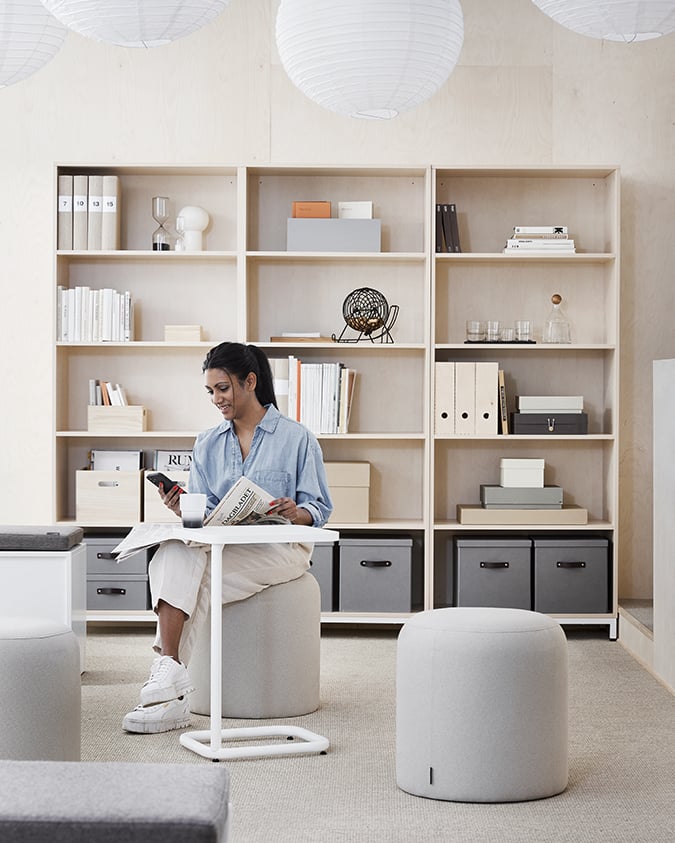
Working environment
The idea behind hybrid work is that every employee should be able to work from anywhere. For it to work well in practice, you'll need to review the different workspaces, in the office as well as remotely.
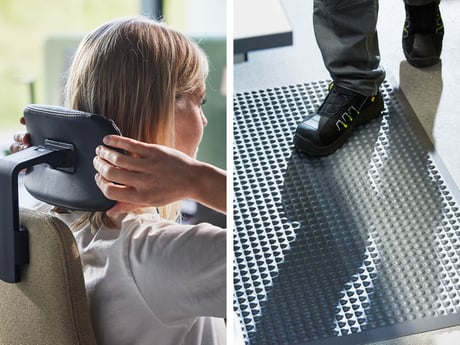
Home offices: The working conditions are the employer's responsibility, regardless of where the work is carried out. It can be quite difficult to keep track of everyone's home offices, but it's a good starting point to ensure that employees have adequate space to work from home and that the space is ergonomically up to scratch.
Read more about home office ergonomics
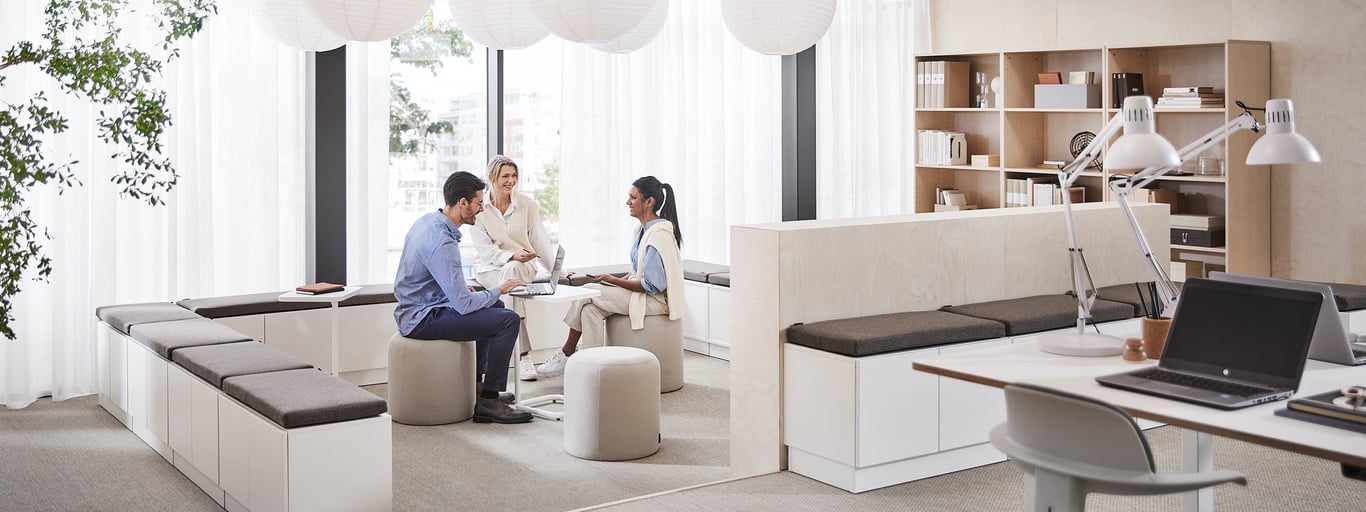
Shared Spaces: So what makes an employee trade the comfort of home for a day at the office? Meeting colleagues to work creatively or to push larger projects forward can be easier and more gratifying when you're in the same room. But if the office is to become a hub for collaboration, several meeting rooms may be needed, perhaps at the expense of "the big conference room". With a number of smaller meeting rooms instead of one large one, more teamwork can take place at the same time.
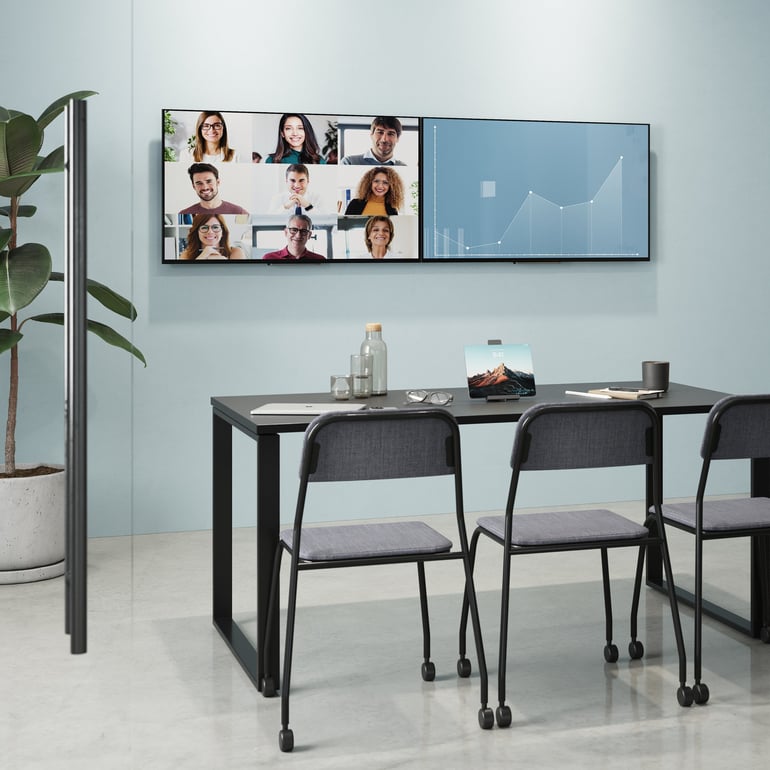
Technology and furniture: Hybrid work requires that both physical and digital meetings are easily facilitated. This requires the right meeting technology to be installed – preferably in several rooms. Furnish well and design rooms so that everyone feels present, regardless of where they are. One tip is to make sure that the screens are visible to everyone on site and that any cameras are taking in the whole room so that everyone, including those participating remotely, can see each other clearly and make good contact.
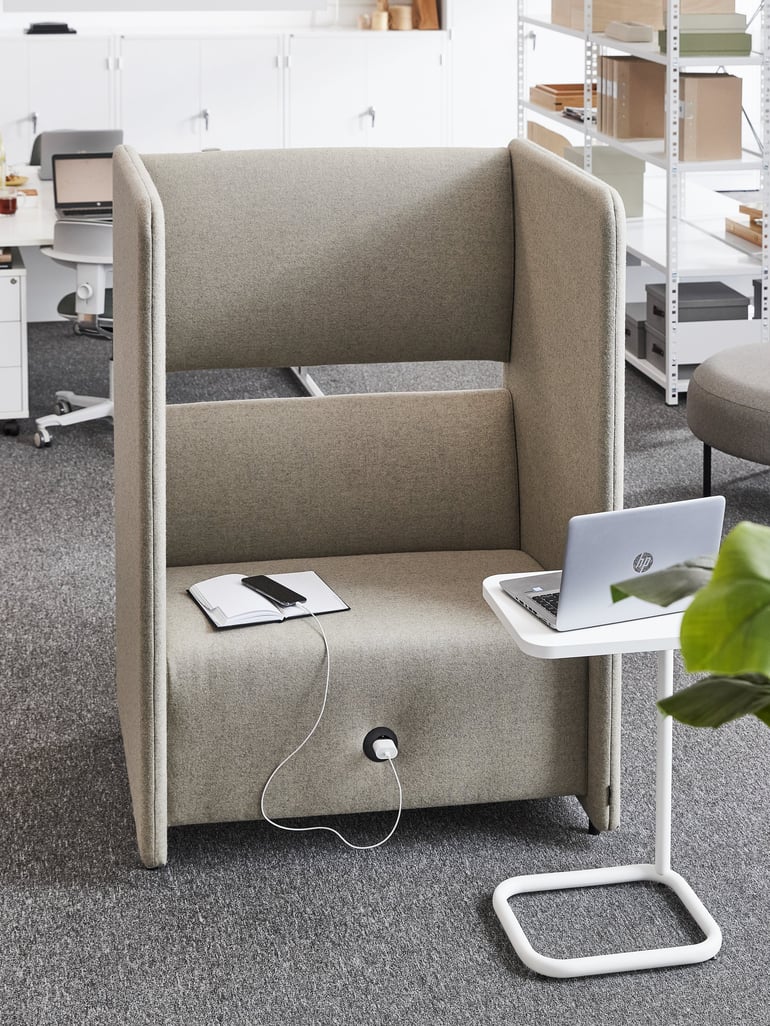
Easy to socialise: The prospect of socialising has always drawn people to the office. For a hybrid workplace, that appeal is very important because the feeling of belonging is reinforced when you see your colleagues. Remember to make room for those spontaneous meetings between colleagues. When comfort is at its greatest, creativity tends to flourish. All that's required are a few sofas, armchairs and tables - proximity to a coffee maker and water machine is a plus, and the rest takes care of itself!


Management
Handing over responsibility can be difficult at first, it requires a strong belief in the employees' ability to plan and complete their tasks themselves. At the same time, mutual trust and responsibility are a prerequisite for hybrid work to function. Dare to let employees grow.Let go of control: As a leader, it's important to stop seeing work as a place, but rather as something you do. The location and time at which the work is done becomes less important. Give employees the right conditions to do a good job and freedom under responsibility, you'll find that both work satisfaction and productivity will increase - as well as the likelihood that employees will be loyal to their workplace.
Distribute responsibility: A well-functioning hybrid workplace not only requires a different type of management, it also requires that each employee take their share of responsibility. A kind of collaboration, if you will! The responsibilities include their own work effort, supporting their colleagues, the culture and the common goals within the group. It's all for one and one for all!