- AJ Products IE
- Blog
- Ergonomics in the workplace
- Stand, cycle or walk - while you work
Stand, cycle or walk – while you work
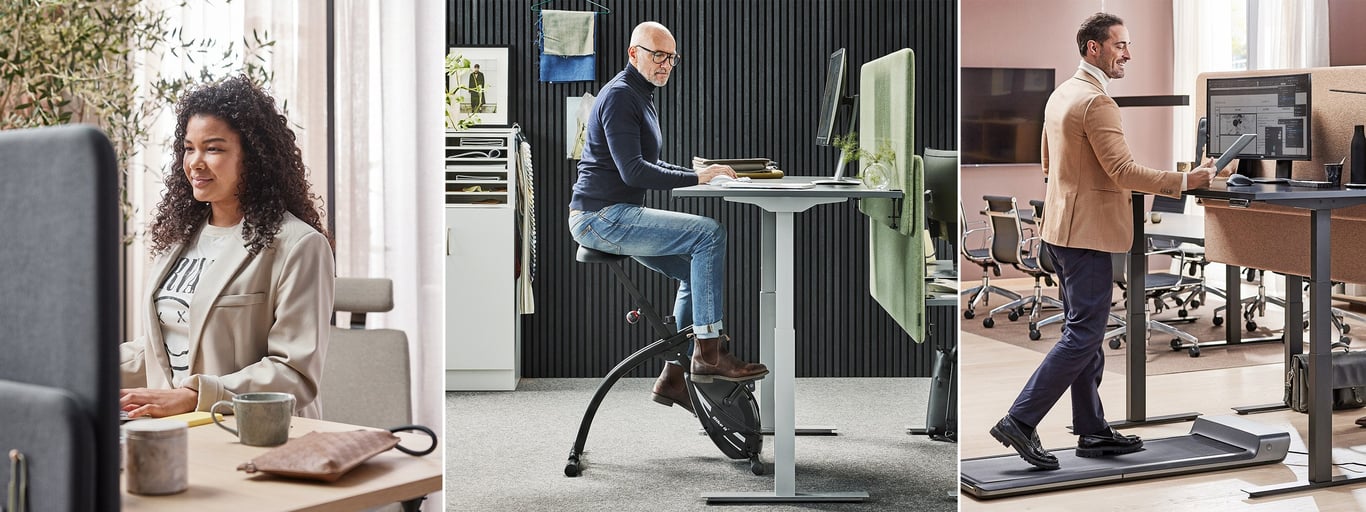
In today’s hecting working life, it’s all too easy to stay seated at your desk for hours on end. But there are simple ways to bring more movement into the office. With small changes and the right equipment, you can make a big difference to your health and create a working day that supports both body and mind. Standing at your desk, cycling as you work or walking on a treadmill, every bit of movement adds up.
Many of us spend eight hours a day, five days a week, sitting in an office chair. And while most of us would like to exercise more, it’s not always easy to find the time or energy after work. The good news is that you don’t need to hit the gym to stay active. With the right equipment, you can build movement into your day and get light exercise without even leaving your desk.
Why movement matters at work
We weren’t designed to sit still all day, and our bodies soon remind us of that. Poor circulation, stiff muscles and afternoon fatigue are all signs that too much sitting is taking its toll. When we sit still for long periods, blood circulation slows down, which can leave us feeling tired and even chilly – especially in the afternoon. Poor circulation also means the muscles get less oxygen and fewer nutrients, which lowers energy levels. On top of that, prolonged sitting increases the risk of muscle tension in the neck and back, which over time can lead to lasting strain injuries. Regular movement is not only good for your body but also for your overall health and mental wellbeing. It helps you feel more relaxed and better prepared to handle the demands of the day.
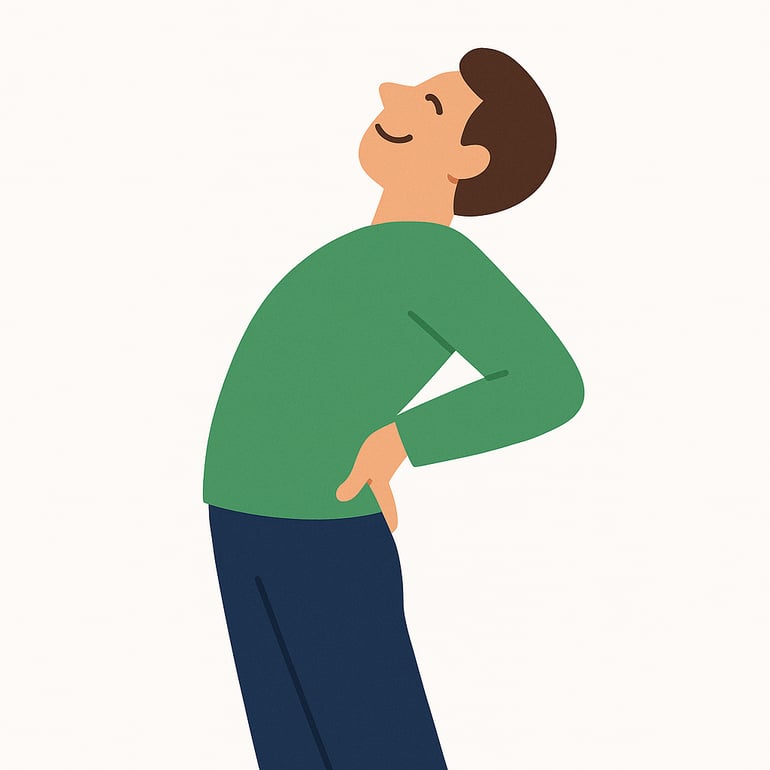
Some benefits of physical activity at work:
Even small amounts of movement during the day can have a big impact. Regular activity:
- Gives a short-term boost to cortisol levels, helping you stay alert
- Supports the growth of new brain cells, keeping your mind sharp
- Strengthens your immune system
- Reduces the risk of muscle tension
- Improves blood circulation
- Increases oxygen uptake, helping you feel more energised
Tip: Any movement counts! Standing up, stretching or even walking to a colleague’s desk will get your blood flowing and help you feel more awake and focused.
So, which products can help you stay a little more active at work?
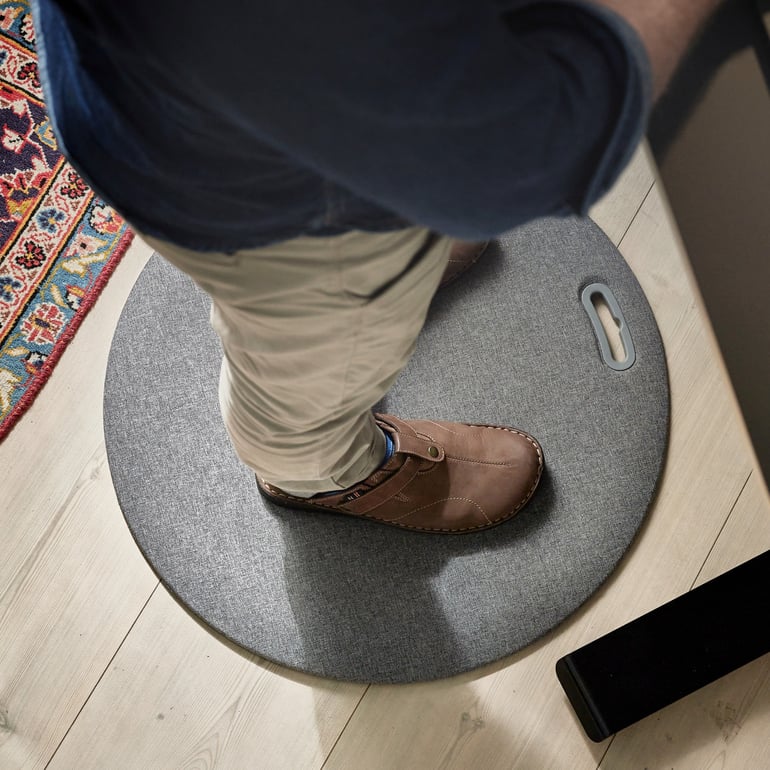
1. Standing mat
An ergonomic standing mat makes standing at your desk more comfortable and gentle on your feet, legs and back. Its soft, supportive surface encourages tiny movements that get your blood flowing and keep muscles and joints feeling fresh.
Did you know that research in the UK shows people who stand burn around 50 calories more per hour than those who sit? Stand for just three hours each workday, and that’s 750 extra calories a week – adding up to around 30,000 in a year. That’s roughly the same as running 10 marathons!
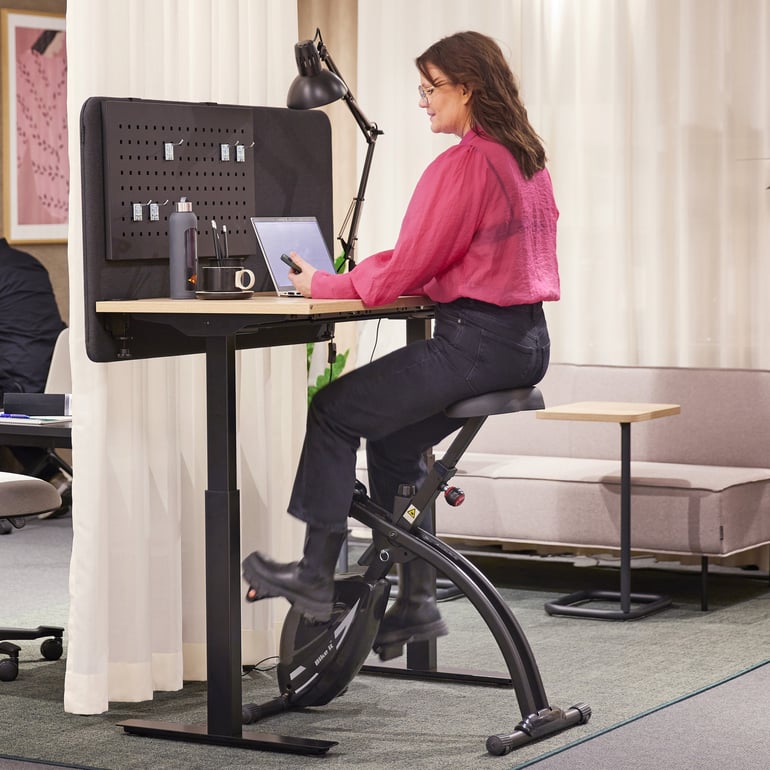
2. Desk bike
A desk bike is a simple way to add movement to your workday without leaving your workstation. Ours is quiet enough to use during calls, easy to move thanks to built-in wheels, and features a display that tracks time, distance, speed and calories burned. The adjustable seat makes it suitable for users between 155 and 195 cm tall, ensuring comfort for a wide range of employees.
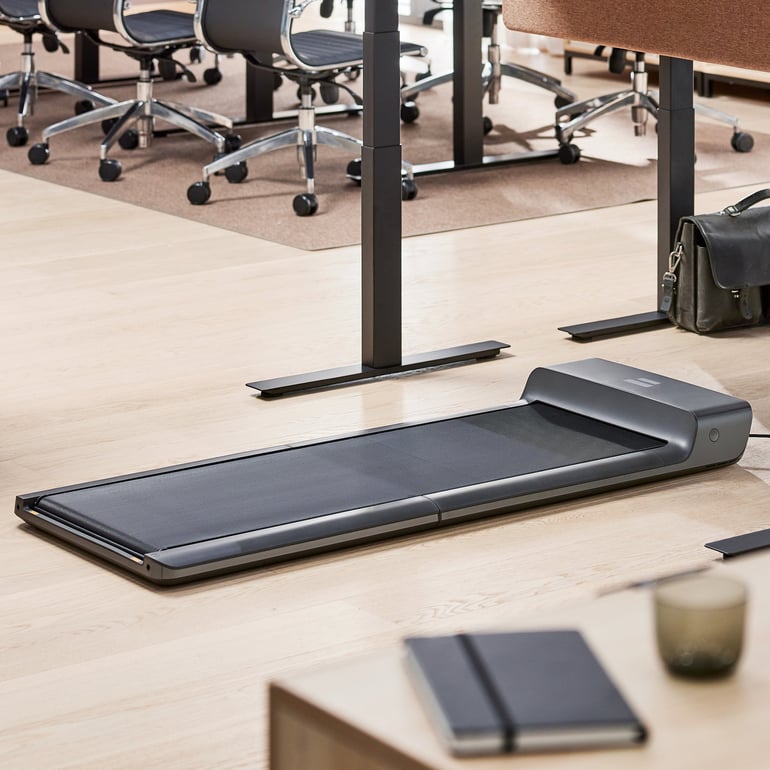
3. Under desk treadmill
Our foldable treadmill is quiet, easy to move thanks to its built-in wheels, and adapts to your walking pace. Control the speed using the remote, your smartphone, or let the belt’s sensors adjust automatically as you walk.
Did you know? The well-known goal of walking 10,000 steps a day didn’t actually come from science - it began as part of a Japanese marketing campaign before the 1964 Tokyo Olympics. A pedometer called Manpo-kei, which translates to “10,000 steps meter,” was used to promote health and fitness. While the number can be a great motivator to get people moving, you don’t need to hit exactly 10,000 steps a day to enjoy the health benefits of being active.
4. Active sitting
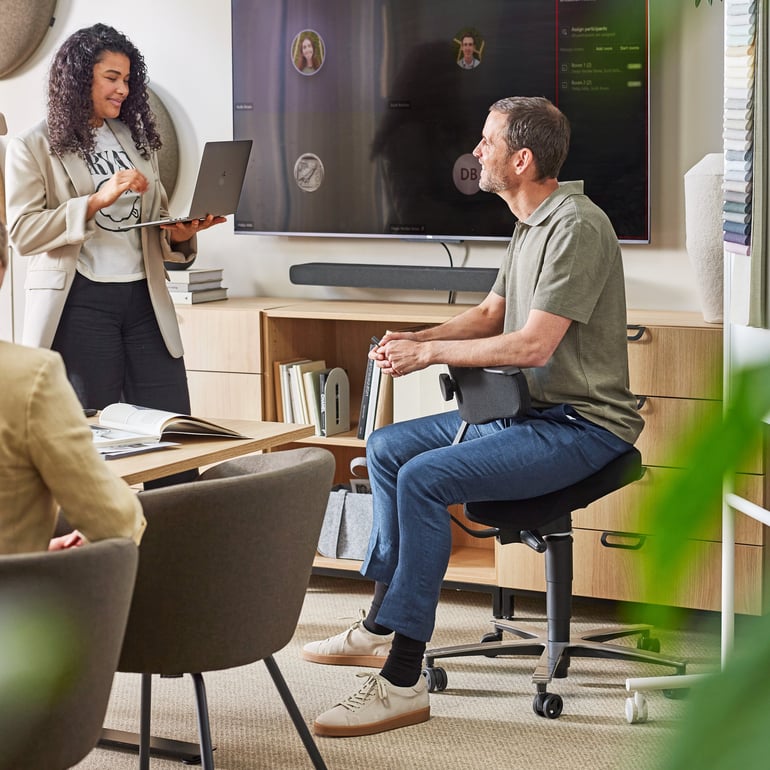
Active seating options such as balance chairs and saddle stools are designed to do more than just provide a place to sit. They help improve posture, reduce strain, and strengthen your core muscles by encouraging small, natural movements throughout the day. This subtle activity keeps your body engaged and can make a big difference to your comfort and wellbeing at work - often without you even realising it.
Need help? Ask our experts!
We at AJ Products are always available to help you with solutions suited just for your business. Contact us if you have questions on the choice of fabric, need some inspiration or want to know the alternatives that would best suit your premises. We can then tell you more about your choices.FAQ
- Cortisol is a hormone produced by the adrenal glands and is part of the glucocorticoid group. It plays an important role in regulating metabolism, blood pressure, and the body’s stress response. During physical activity, cortisol levels can rise temporarily. This is a natural reaction that helps your body release energy, stay alert, and cope with physical or mental stress.
- Yes. Regular physical activity can stimulate the growth of new brain cells through a process called neurogenesis. This mainly happens in the hippocampus, the area of the brain linked to memory, learning, and emotional regulation. Exercise also boosts brain plasticity - the ability to form and strengthen new connections between nerve cells - which supports better cognitive function and long-term brain health.
- Sedentary work is linked to a higher risk of cardiovascular disease, type 2 diabetes, and several common types of cancer. Sitting still for long periods can also contribute to musculoskeletal problems, such as back and neck pain, as well as stress injuries caused by poor posture and lack of movement.
- Manpo-kei is the name of a Japanese pedometer that translates to “10,000-step meter”. It was launched by the company Yamasa Tokei as part of a marketing campaign for the 1964 Tokyo Olympics. The device helped popularise the idea of walking 10,000 steps a day as a benchmark for good health.
- You don’t need to hit exactly 10,000 steps a day to see health benefits. Research shows that even walking around 2,300 steps daily can reduce the risk of cardiovascular disease. That said, aiming for 7,000 - 10,000 steps a day is a good benchmark, as this range is linked to the greatest overall health benefits.