- AJ Products IE
- Blog
- Tips & trends
- How to Increase Warehouse Capacity Without Expanding Your Building
How to Increase Warehouse Capacity Without Expanding Your Building Introduction
Ireland’s industrial property market remains extremely tight. According to Cushman & Wakefield’s Ireland Industrial MarketBeat, the national industrial vacancy rate stood at just 3.6% in Q4 2025 and remained historically low at 4.7% in Q1 2026. High demand, rising rents and cost pressures mean that relocating or adding floor space is often impractical for Irish SMEs. Instead, companies must optimise their existing warehouse. This article explains why warehouses “fill up” over time and shares 7 practical tactics to unlock more space and efficiency (without bricks and mortar expansion).
Why Warehouses Run Out of Space
Warehouses rarely “fill up” suddenly. Capacity shortages usually build up over time as operations change. Common causes include:
- Product and SKU growth: More product lines or higher safety stock levels (often added post-Brexit) can eat up space.
- Inefficient layouts: Excessively wide aisles, poorly placed fast-moving goods, or scattered picking zones can leave usable cubic metres unused.
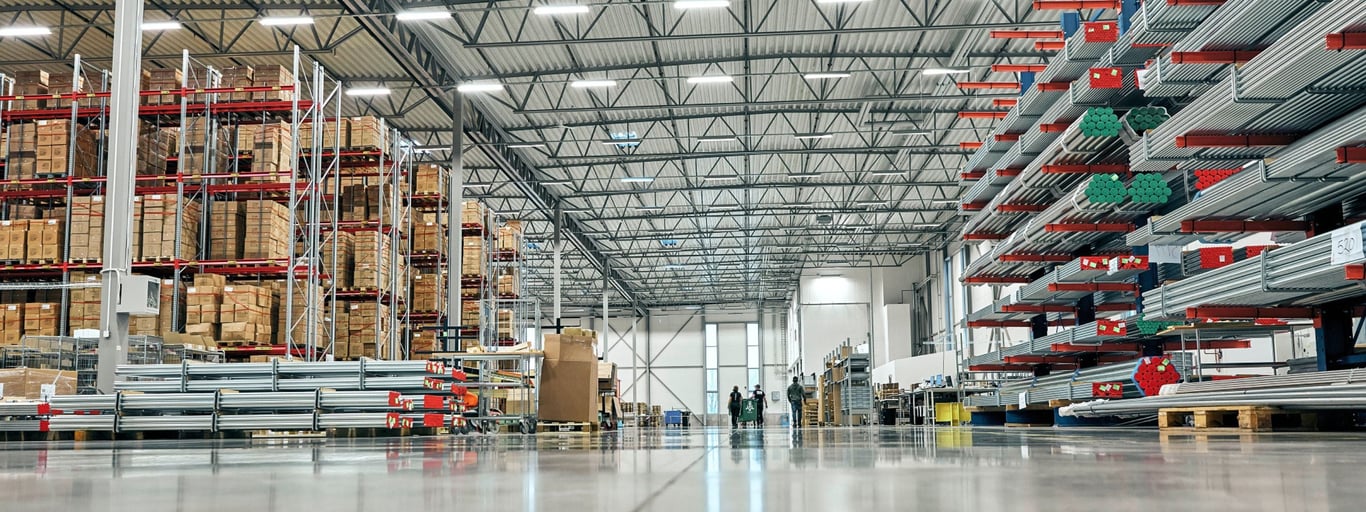
- Underused vertical space: Many facilities have unused height – for example, pallet racks are not extended to the ceiling.
- Seasonal inventory: Temporary peaks (holidays, sales, production runs) may have become “normal” storage without a layout re-assessment.
- Inconsistent storage systems: Mixing pallet racking, shelving, and floor stacking without a strategy can create gaps or dead zones.
The Hidden Cost of a “Full” Warehouse
An overcrowded warehouse impacts more than just storage. Inefficient use of space leads to:
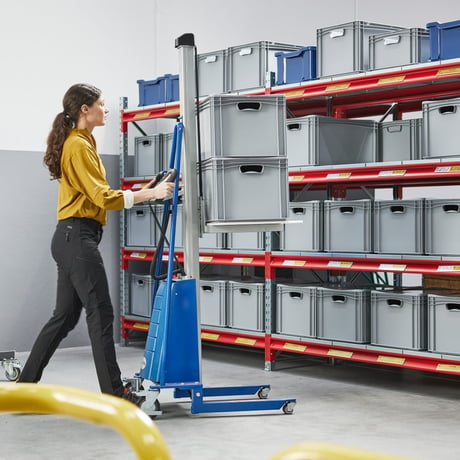
- Wasted labour: Workers and forklifts travel farther. Time spent driving means less picking or loading.
- Lower productivity: Congestion slows down inbound/outbound processing and picking rates.
- Higher error rates: Rushing through busy aisles or searching for items can increase picking mistakes.
- Safety risks: Tight aisles and cluttered floors elevate trip/fall hazards and complicate vehicle/pedestrian separation. The Irish Health and Safety Authority (HSA) highlights controlling vehicle movement and preventing slips, trips and falls as top warehousing safety issues.
- Customer delays: Congestion at dispatch areas can delay shipments, impacting service levels.
- Overtime and strain: When capacity is tight, even small demands trigger overtime or temporary labour, further raising costs.
7 Practical Ways to Increase Warehouse Capacity
1. Use Vertical Space Effectively
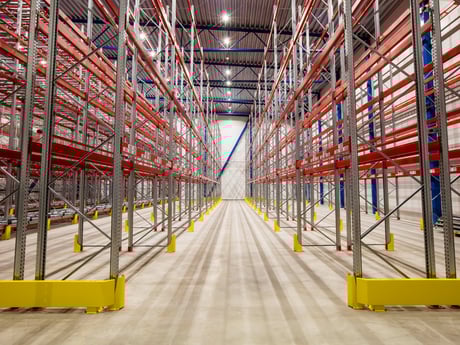
- Install taller pallet racking or long-span shelving to use unused overhead room. Modern warehouses (10–12m height) can often double storage by adding more rack levels.
- Consider multi-tier mezzanines or raised platforms for picking zones and light storage. These create “extra floors” without a building extension.
2. Remove Obsolete or Slow-Moving Stock
- Conduct a cycle count or inventory audit to find discontinued or slow items. Clearing out dead stock immediately frees space.
- Implement an ABC analysis: shift low-movers to bulk locations (or offsite storage) and keep fast-movers at eye-level.
3. Optimise Slotting and Layout
- Slot (organise) SKUs so that fast-moving products are easy to reach (e.g. at waist height, near packing) and slow items are tucked away.
- Revisit your rack layout: could aisles be narrower? Could specialized areas (like bulk, picking, returns) be reorganised?
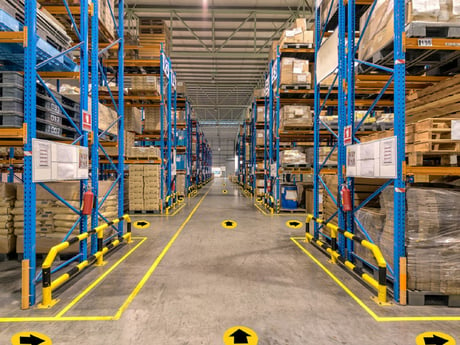
- Use pallet labels, signs and floor markings to keep each item in a designated spot. Visual controls reduce wasted space and picking time.
4.Implement Lean 5S and Visual Management
- Apply 5S principles: Sort (remove unneeded items), Set in order (neat storage), Shine (clean), Standardise (uniform practices) and Sustain.
- For example, use shadow boards for tools, dedicated racks for returns, and clearly label shelves. This prevents random pile-ups.
- Good housekeeping (ensuring aisles are clear) not only improves safety but often reveals hidden nooks for additional racks.
5. Reconfigure Storage Zones
- Group similar items or processes together: e.g. consolidate multi-line items to central bulk racks.
- Create a clearly defined goods-in staging area to stop pallets “bleeding” into picking aisles.
- If possible, reserve dock-adjacent space for fast-moving goods. This reduces unnecessary pallet movements across the warehouse.
6. Use High-Density Storage
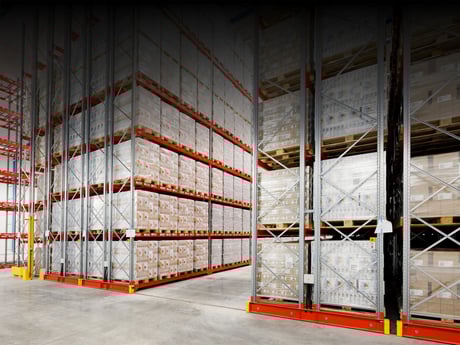
- Where operations allow, switch to narrow-aisle racking or double-deep racks. This can dramatically increase pallet density (at the expense of requiring narrow-aisle forklifts or ATLs).
- Mobile shelving or rack systems (on rails) also add capacity by eliminating multiple fixed aisles.
- Cantilever racking can store long or awkward items (pipes, lumber) more compactly.
7. Adjust for Seasonal Variations
- If you use external/overflow storage during peaks, plan to bring that stock back in between seasons.
- Consider short-term solutions (rentable racks or mezzanines) for temporary space needs.
Each step above should be evaluated for your specific context. A few small improvements (for example, adding just one more pallet level or narrowing one aisle) can often yield 10–20% more usable space without any building work.

Capacity Audit Checklist
Ask these questions to identify immediate gains:
- Are you using full building height?
- Are wide aisles really necessary?
- Is unused or obsolete stock cluttering storage areas?
- Are your fast-moving SKUs stored near the dispatch area?
- Do you perform regular cycle counts or slotting reviews?
- Is space left intentionally for future needs, or filled with excess stock?
Each questions answerd as “No” highlights an opportunity. Start with the “quick wins” and build momentum.
When to Consider Expansion
Even after optimisation, there may come a point when additional square metres are unavoidable. Indicators include:
- Sustained growth: Sales volumes keep growing faster than you can reorganise.
- Equipment constraints: You’ve maxed out vertical or aisle changes without new equipment (e.g. low clear height, old building)
- Chronic bottlenecks: Goods-in or shipping areas are overloaded despite best efforts.
For now, most Irish businesses find that modest investments in racking, shelving, and workflow pay off more than new leases. Focus on “working smarter” first; only then consider bigger moves.
Making Warehouse Optimisation Work for Your Business
Making the most of your existing warehouse space is often faster, more cost-effective and less disruptive than relocating or expanding your facility. By improving layouts, using vertical storage more effectively and streamlining workflows, many businesses can unlock significant additional capacity within their current footprint.

More questions?
If you have any more questions or need a hand with space planning, our expert project sales team is ready to help! We can advise you on storage capacity, warehouse layout or material handling processes and we can support you in finding an optimal solution for your business. Email: projectsupport_ie@ajproducts.ie or call: 01 2811700