- AJ Products IE
- Blog
- Tips & trends
- Warehouse Layout Optimisation – Improve Efficiency and Workflow
Warehouse Layout Optimisation: Improve Efficiency and Workflow
Once you have maximised your storage capacity, the next critical step is optimising your warehouse layout and workflow. A well-designed layout reduces wasted movement, speeds up picking and packing, and improves safety. In this article, we focus on tactics to streamline goods-in, storage, picking and dispatch processes. These include zoning strategies, picking methods, and smarter use of equipment (shelving, safety barriers, mobile trolleys, etc.) so you’ll make every metre of your warehouse work harder for you.
Why Layout Matters in Ireland
Poor warehouse layouts can increase travel distances, create bottlenecks and reduce picking efficiency, leading to unnecessary labour costs and slower order fulfilment. In Ireland’s tight labour market, every minute of wasted travel is costly. By improving flow, you can handle more orders with the same staff. Consider:
- Worker Fatigue: Long, repetitive walks across wide aisles lead to exhaustion and injury.
- Space Under-Utilised: Inefficient corridors or wrong storage in certain zones.
- Safety Concerns: Congestion and blind corners increase accident risk.
The Health and Safety Authority (HSA) recommends clear pedestrian paths and forklift routes in warehouses. A tidy layout not only boosts efficiency but helps meet safety standards.
Review Your Warehouse Layout
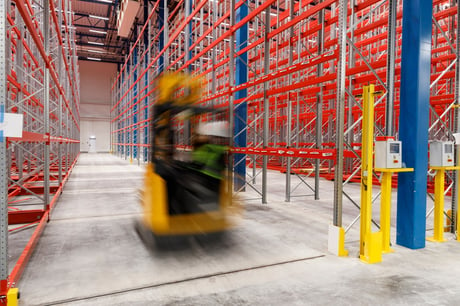
Warehouse layouts should be re-evaluated regularly, especially after adding SKUs or changing workflows. Look at the flow of materials from goods-in through storage to goods-out:
- Inbound/outbound areas: Are the loading bays, receiving, and dispatch zones optimally placed? Can unpacked or incoming pallets be stored close to shipping if needed (cross-docking)?
- Picking routes: Plan pick paths to minimise travel distance. For example, group fast-moving products (A items) close to packing and shipping areas.
- Staging and buffer zones: Ensure ample space for packing stations, pallet staging, and temporary surge storage. Unplanned back-ups often shrink “usable” space.
- Traffic flow: Separate busy forklift aisles from pedestrian areas. Mark one-way routes if needed (see Safety section).
Improve Picking Efficiency
Think of warehouse “capacity” not just in pallet space, but in what you can process per shift. More efficient picking effectively increases your throughput:
- Zone picking: Assign teams or equipment to specific warehouse zones. This concentrates travel within zones and can reduce congestion in shared aisles.
- Batch or wave picking: Pick multiple orders in one pass (especially for fast-moving items), then sort afterwards. This reduces repeated trips through the same aisle.
- Pick-to-light or pick-to-voice systems: Even simple systems (scannable pick lists, LED pick indicators) can cut errors and speed up picks, reducing the buffer stock you need.
- Proper picking trolleys and boxes: Using ergonomic pick trolleys and bins helps keep organized movement. Bins sized for single orders or product families can increase density on the floor.
- Dedicated packing stations: Creating fixed packing benches with materials at hand avoids packing spills into aisles.
Faster picking means orders clear the warehouse more quickly, so inventory cycles faster. Over time, this can reduce the amount of stock you need on hand, freeing space (and cash) in the process.
Improve Ergonomics and Safety
Optimising layout isn’t just about space, it’s about people:
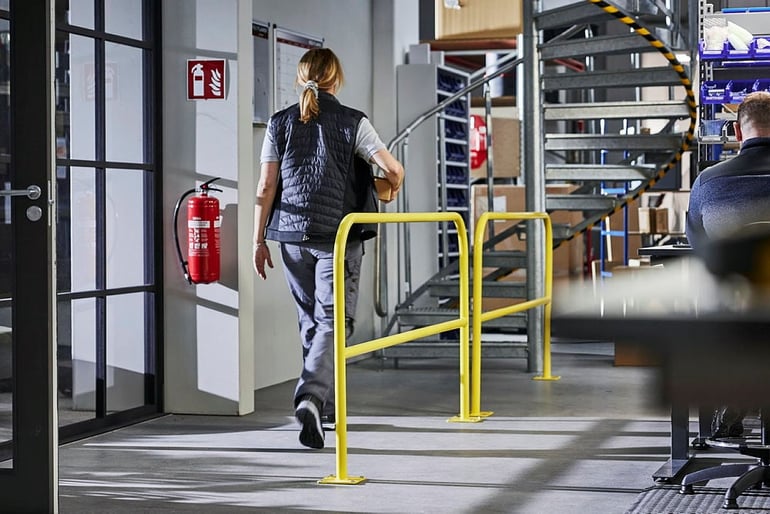
- Forklift/Pedestrian Segregation: Use safety barriers and marked walkways to separate traffic. HSA guidelines stress the importance of designated walkways.
- Anti-Fatigue Mats and Seating: Where pickers stand for long times, cushioned mats and stools (in pack areas) can improve comfort and speed.
- Reach and Lift Safety: Place heavy pallets at waist height. For shelving zones, ensure shelf heights minimize overreach.
- Lighting and Signage: Well-lit aisles and clear directional signs speed up travel and reduce errors.
Consider Narrower Aisles and High-Density Storage
Not all warehouses need wide aisles for counterbalanced forklifts. Depending on operations, you might switch to:
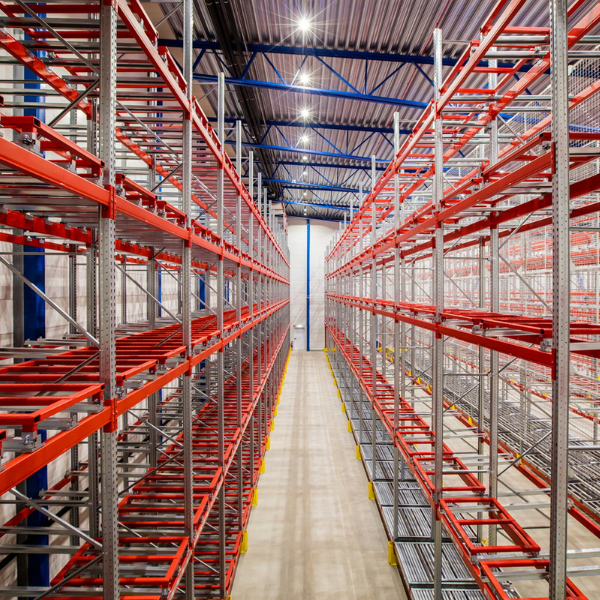
- Narrow-aisle or very narrow-aisle (VNA) layout: Using specialized forklift trucks (or order pickers), aisles can be 1-2 meters narrower than typical. This instantly adds more rack rows.
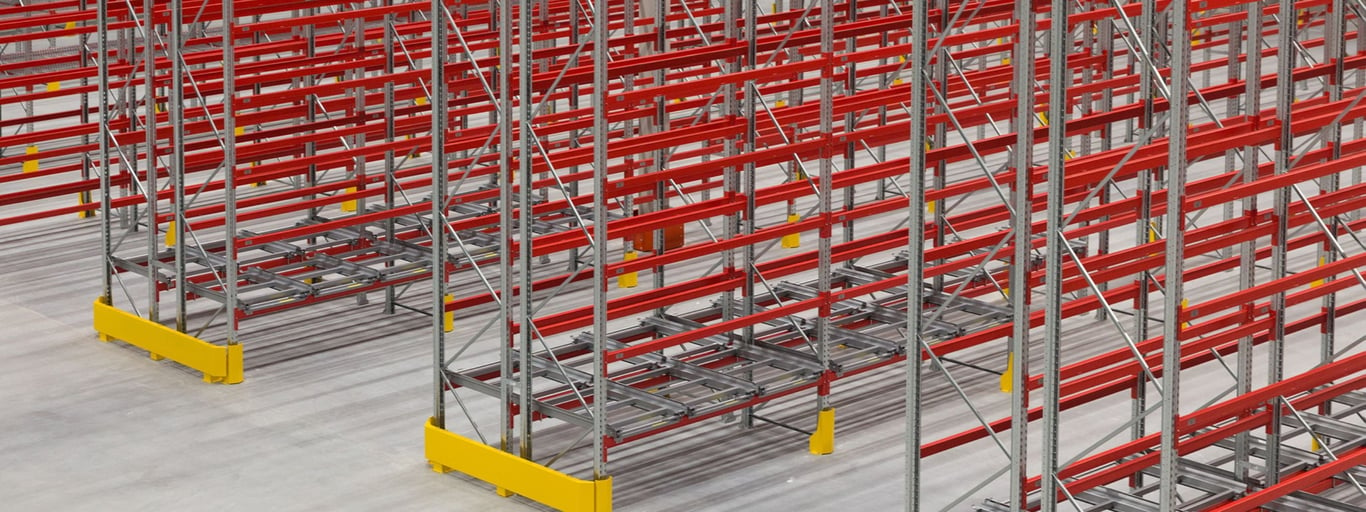
- Double-deep or drive-in racking: Pallets are stored two deep in each bay, requiring fewer aisles (at the expense of one pallet being blocked behind another). Good for homogeneous products or high-turnover items that don’t need random access.
- Mobile racking: Shelving racks on wheels can be compacted together, opening only the aisle you need at any moment. Used more in offices and archives, but modern mobile systems exist for pallet racking too.
Use Data to Support Better Decisions
Do you really know where every item is, and how fast it moves? Many SMEs still use spreadsheets or pen-and-paper. Investing in even a basic barcode system or WMS module can pay off:
- Inventory accuracy: Barcoding incoming goods and scanning at pick/ship reduces lost stock and ensures you’re not holding excess “just in case.”
- Space utilisation metrics: Good WMS can report which locations are under/over-utilised, guiding re-slotting decisions.
- Planning seasonal changes: Data helps forecast which aisles will back up during peaks, so you can pre-emptively create temporary lanes or overflow areas.
- Performance tracking: Monitor KPIs like picks per hour or orders per area to spot bottlenecks. A new layout should show up as productivity gains.
Technology should never force a layout; rather, it reveals where improvements are needed and confirms that changes worked. Begin with small steps (a barcode scanner on the forklift or basic inventory software) before leaping to full automation.
Sector Considerations
Different industries may optimise space differently:
Food & Beverage: Often limited by temperature zones (chilled/freezer). Focus on FIFO storage and clear labelling. For ambient goods, use mobile shelving or compact aisle designs when possible.
Pharma & MedTech: Traceability and batch management are critical. Automated shelving or lift systems (miniloads) can safely increase vertical storage in controlled environments.
Industrial Engineering/Construction: Heavy and bulky items may need high-capacity pallet racking or specialized cantilever arms. Mezzanines can be ideal for lighter sub-assemblies or packaging areas.
Retail & Wholesale Distribution: Often have large SKU counts and fast turnover. Dock-to-stock layouts and dynamic slotting (for promotions) help, plus mezzanines for slower-moving goods.

More questions?
If you have any more questions or need a hand with space planning, our expert project sales team is ready to help! We can advise you on storage capacity, warehouse layout or material handling processes and we can support you in finding an optimal solution for your business. Email: projectsupport_ie@ajproducts.ie or call: 01 2811700